

Introduction
Germany remains one of Europe's most attractive destinations for international job seekers. With one of the continent's largest economies, a strong manufacturing sector, world-class healthcare system, and growing technology industry, the country continues to recruit skilled professionals from around the world.
If you're planning to get a job in Germany as a foreigner in 2026, you'll find opportunities across engineering, healthcare, IT, logistics, construction, hospitality, education, and skilled trades. However, success requires more than simply submitting applications. Employers expect well-prepared candidates who understand the German recruitment process, visa requirements, and workplace culture.
This comprehensive guide explains everything you need to know—from choosing the right industry to obtaining a work visa and settling into life in Germany.
Photo source: © West News
Why Germany Is a Top Destination for International Workers
Germany has experienced labor shortages for several years, particularly in healthcare, engineering, logistics, skilled trades, and information technology. An aging population and continued economic demand have encouraged employers to recruit internationally, making Germany increasingly accessible to qualified foreign workers.
Beyond employment opportunities, Germany offers strong worker protections, competitive salaries, comprehensive public healthcare, paid vacation, parental leave, and a high standard of living. Employees also benefit from structured career development and vocational training programs.
Many international professionals view Germany as a long-term destination because employment can lead to permanent residence if legal requirements are met.
Can Foreigners Get a Job in Germany?
Several industries continue to experience significant worker shortages.
Healthcare
Germany urgently recruits:
- Registered nurses
- Elderly caregivers
- Medical technicians
- Physiotherapists
- Doctors (subject to licensing)
Healthcare professionals often benefit from strong demand, although regulated professions usually require recognition of foreign qualifications.
Information Technology
Germany's growing technology sector seeks professionals such as:
- Software developers
- Cloud engineers
- Cybersecurity specialists
- AI engineers
- Data analysts
- DevOps engineers
Many technology companies use English as their working language, although German remains an advantage.
Engineering
Demand remains high for:
- Mechanical engineers
- Electrical engineers
- Civil engineers
- Automotive engineers
- Industrial engineers
Germany's manufacturing sector continues to offer opportunities with global employers.
Skilled Trades
Vocational occupations include:
- Electricians
- Welders
- Plumbers
- Carpenters
- HVAC technicians
- Industrial mechanics
Practical experience is highly valued alongside formal training.
Logistics and Warehouse Jobs
Growth in e-commerce and manufacturing has increased demand for:
- Warehouse operatives
- Forklift drivers
- Supply chain coordinators
- Delivery drivers
Some entry-level positions require limited German language skills, while supervisory roles often require greater fluency.
Hospitality and Tourism
Hotels and restaurants regularly recruit:
- Housekeepers
- Chefs
- Kitchen assistants
- Waitstaff
- Receptionists
Seasonal hiring is common in tourist regions.
Most In-Demand Jobs in Germany (2026)
Sagittis et eu at elementum, quis in. Proin praesent volutpat egestas sociis sit lorem nunc nunc sit. Eget diam curabitur mi ac. Auctor rutrum lacus malesuada massa ornare et. Vulputate consectetur ac ultrices at diam dui eget fringilla tincidunt. Arcu sit dignissim massa erat cursus vulputate gravida id. Sed quis auctor vulputate hac elementum gravida cursus dis.
- Lectus id duis vitae porttitor enim gravida morbi.
- Eu turpis posuere semper feugiat volutpat elit, ultrices suspendisse. Auctor vel in vitae placerat.
- Suspendisse maecenas ac donec scelerisque diam sed est duis purus.
Qualifications German Employers Value
German employers generally expect application documents that are clear, professional, and tailored to the role.
A typical application includes:
- A German-style CV
- A personalized cover letter
- Educational certificates
- Professional qualifications
- References (if available)
- Language certificates when relevant
Each application should emphasize the skills that match the specific position rather than using a generic template for every employer.
After applying, candidates may complete one or more interviews, technical assessments, or practical tests depending on the position.
Germany Work Visa Options
If you are not an EU citizen, you will usually require a residence permit that authorizes employment.
Common pathways include:
EU Blue Card
Designed for highly qualified professionals with recognized qualifications and a qualifying job offer that meets current salary thresholds.
Skilled Worker Residence Permit
Available for many qualified professionals whose foreign qualifications are recognized or otherwise meet the applicable legal requirements.
Job Seeker Opportunity
Some eligible applicants may be able to enter Germany to search for employment under the applicable immigration rules. Eligibility varies, and applicants should review the current requirements before applying.
Visa eligibility, documentation, and procedures change periodically, so applicants should always consult official German government resources before submitting an application.
Documents You'll Need
Although requirements vary depending on the visa category, applicants commonly prepare:
- Valid passport
- Updated CV
- Job offer or employment contract (where required)
- Educational certificates
- Professional qualifications
- Passport photographs
- Health insurance documentation
- Proof of accommodation (when applicable)
- Visa application forms
- Financial evidence if required
Documents issued outside Germany may require certified translations or legalization depending on local regulations.
Salary Expectations
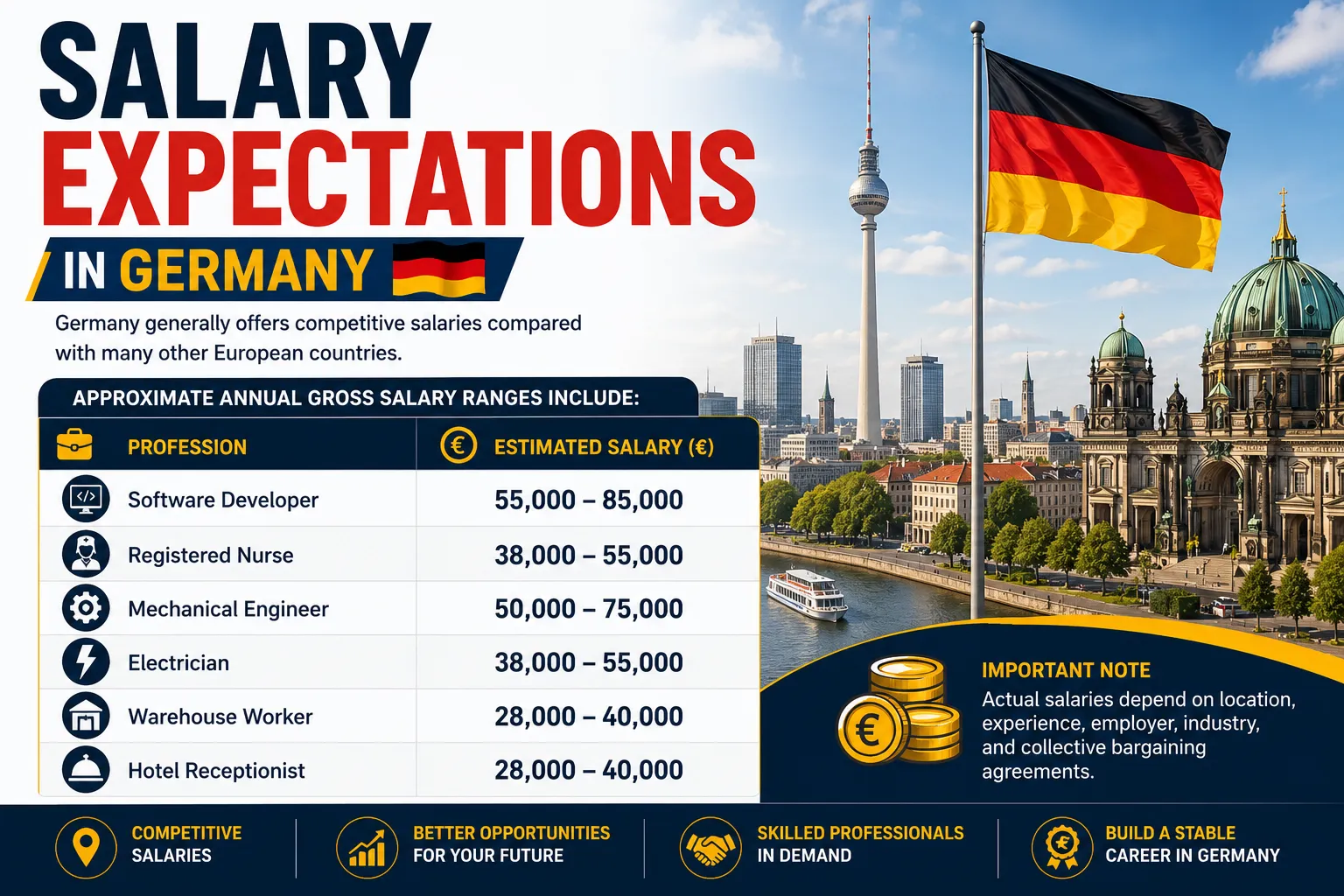
Germany generally offers competitive salaries compared with many other European countries.
Approximate annual gross salary ranges include:
| Profession | Estimated Salary (€) |
|---|---|
| Software Developer | 55,000–85,000 |
| Registered Nurse | 38,000–55,000 |
| Mechanical Engineer | 50,000–75,000 |
| Electrician | 38,000–55,000 |
| Warehouse Worker | 28,000–40,000 |
| Hotel Receptionist | 28,000–40,000 |
Actual salaries depend on location, experience, employer, industry, and collective bargaining agreements.
Cost of Living in Germany
Living costs vary considerably between cities.
Munich, Frankfurt, Hamburg, and Stuttgart are among the more expensive locations, while many smaller cities offer lower housing costs.
Typical monthly expenses include:
- Rent
- Utilities
- Health insurance
- Food
- Transportation
- Internet and mobile services
When evaluating a job offer, consider both the salary and the local cost of living rather than focusing solely on gross income.
Tips to Improve Your Chances of Getting Hired
International applicants who prepare thoroughly generally have better outcomes.
Consider the following:
- Learn basic German before applying.
- Tailor every CV and cover letter.
- Research employers carefully.
- Highlight internationally recognized qualifications.
- Gain relevant certifications where appropriate.
- Apply consistently rather than waiting for the perfect role.
- Build a professional LinkedIn profile.
- Be prepared for multiple interview stages.
Persistence is often essential. Many successful candidates submit numerous applications before receiving an offer.
Common Mistakes to Avoid
Many applicants reduce their chances by making avoidable errors.
Common issues include:
- Sending identical applications to every employer.
- Applying without checking visa eligibility.
- Ignoring qualification recognition requirements.
- Using poorly formatted CVs.
- Underestimating the importance of German language skills.
- Failing to prepare for interviews.
- Not researching company expectations.
A well-prepared application demonstrates professionalism and genuine interest in the role.
How to Apply for Jobs Successfully
German employers generally prioritize demonstrated competence over generalized claims. A well-structured CV that highlights measurable achievements is often more effective than lengthy descriptions.
Professional qualifications, vocational certificates, university degrees, and industry certifications all strengthen an application. In regulated professions such as healthcare or teaching, foreign credentials may need formal recognition before employment is permitted.
Relevant work experience, technical expertise, language ability, and adaptability are also important factors during recruitment.
Do You Need to Speak German?
Not always.
Many multinational companies hire English-speaking professionals, especially in software development, engineering, finance, and research.
However, German language skills significantly increase employment opportunities across most industries. Healthcare, customer service, education, public administration, retail, and many skilled trades often require German proficiency.
As a general guide:
| Job Type | German Required? |
|---|---|
| Software Development | Often No |
| Engineering | Sometimes |
| Healthcare | Usually Yes |
| Hospitality | Often Yes |
| Warehouse Jobs | Sometimes |
| Research | Often No |
Even basic German skills (A2–B1 level) can improve your competitiveness and help with everyday life.
Where to Find Jobs in Germany
Most vacancies are advertised online through employer websites and established recruitment platforms.
Useful places to search include:
- The Federal Employment Agency (Bundesagentur für Arbeit)
- EURES European Job Mobility Portal
- LinkedIn Jobs
- StepStone Germany
- Indeed Germany
- Company career pages
- Recruitment agencies specializing in international hiring
Networking also plays an important role. Joining professional associations, attending industry events, and connecting with recruiters on LinkedIn can lead to opportunities that are not widely advertised.
FAQ
If your goal is to get a job in Germany as a foreigner, preparation is just as important as qualifications. Understanding the German hiring process, tailoring your applications, improving your language skills, and ensuring you meet visa and qualification requirements can significantly improve your chances of success.
Germany continues to offer excellent opportunities across a wide range of industries, particularly for skilled professionals and workers in shortage occupations. By relying on official information, maintaining realistic expectations, and applying strategically, you can position yourself for a successful career in one of Europe's strongest job markets.